Invisalign Treatment Dubai: Invisible Aligners & Clear Braces for a Perfect Smile
Get Invisalign treatment in Dubai at Dr. AL Dental Clinic. Clear aligners & braces for a perfect smile. Safe, effective, and comfortable.
Read More
Types, Location & Severity Explained by Our Dentists at Dr. AL Dental Clinic, Dubai
Dental caries (tooth decay) is one of the most common oral health problems worldwide. Understanding how cavities are classified helps patients recognize problems early and choose the right treatment at the right time. At Dr. AL Dental Clinic in Dubai, our American Board-Certified dentists use modern diagnostic methods to identify caries accurately and treat them effectively.
Dental caries can be classified in two main ways:
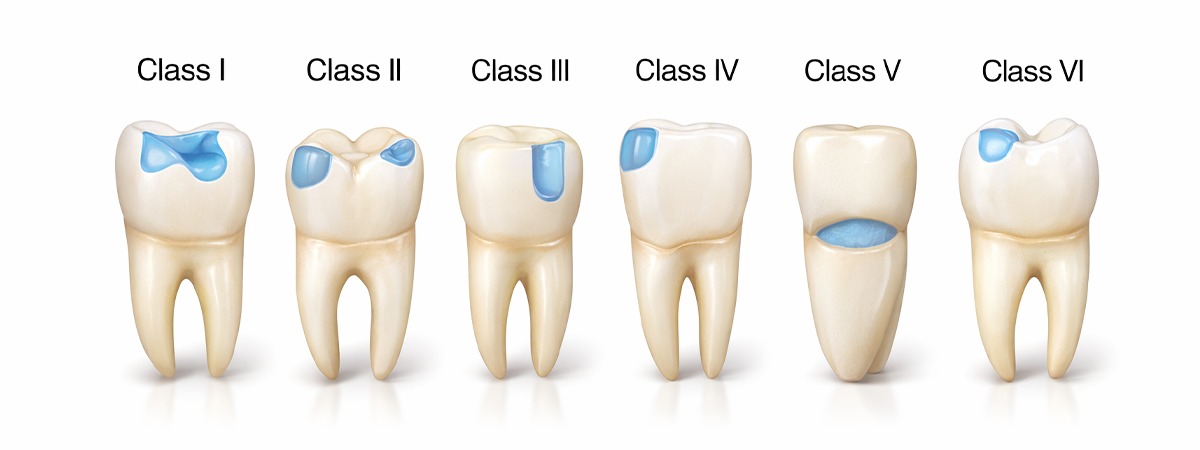
Dentists often classify cavities according to the surface of the tooth affected. One of the most widely recognized systems was developed by Dr. G.V. Black , known as the “father of modern dentistry”. His classification helps dentists identify where decay occurs and plan the most effective treatment.
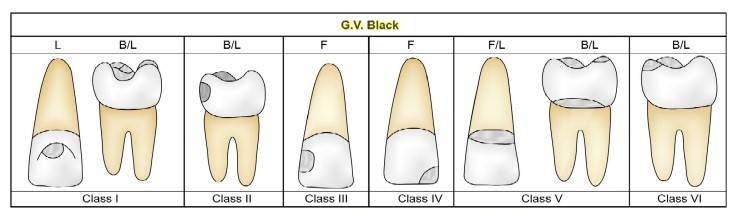
These cavities develop in the natural grooves and pits of teeth, mainly on the chewing surfaces of molars and premolars. They may also appear in small pits on the back of front teeth. Because these areas trap food easily, decay can start even when the tooth looks healthy from the outside.
This type affects the contact areas between molars and premolars. Since these surfaces are not easily visible, the decay often progresses without pain and is usually detected during dental X-rays at routine checkups.
Class III caries occur between front teeth such as incisors and canines but do not reach the cutting edge. These cavities are often associated with plaque buildup and poor flossing habits.
In this case, decay affects both the side surface and the biting edge of front teeth. Treatment usually focuses on restoring both function and aesthetics, which is why advanced cosmetic techniques are often used.
These cavities form near the gumline on the front or back surfaces of teeth. They are commonly linked to gum recession, aggressive brushing, or acidic diets.
This less common category involves decay on the pointed chewing tips of back teeth or the sharp edges of front teeth. It often results from excessive tooth wear combined with weakened enamel.
Caries can also be classified based on how far the decay has progressed inside the tooth.
At this stage, the enamel begins to lose minerals and may appear as white or chalky spots. There is no cavity yet, and the process can often be stopped or reversed with fluoride treatment and improved oral care.
Here, the decay has broken through the enamel surface but has not reached the inner layers. Treatment is usually simple and may involve a small filling.
Once decay reaches the dentin, it spreads faster and may cause sensitivity. Prompt treatment is essential to prevent further damage and avoid nerve involvement.
Deep caries extend close to the pulp (nerve) of the tooth. Patients may experience pain or sensitivity, and treatment becomes more complex, sometimes requiring protective liners or advanced restorative care.
This is the most advanced stage, where decay reaches the tooth pulp. Infection and severe pain are common, and treatment may involve root canal therapy or, in severe cases, tooth extraction.
At Dr. AL Dental Clinic, we emphasize early detection of dental caries through regular checkups and digital X-rays. Treating cavities at an early stage helps:
Our clinic is equipped with advanced diagnostic technology and led by experienced, American Board-Certified dentists. Whether it’s early enamel damage or advanced tooth decay, we provide personalized treatment plans focused on comfort, precision, and long-lasting results.
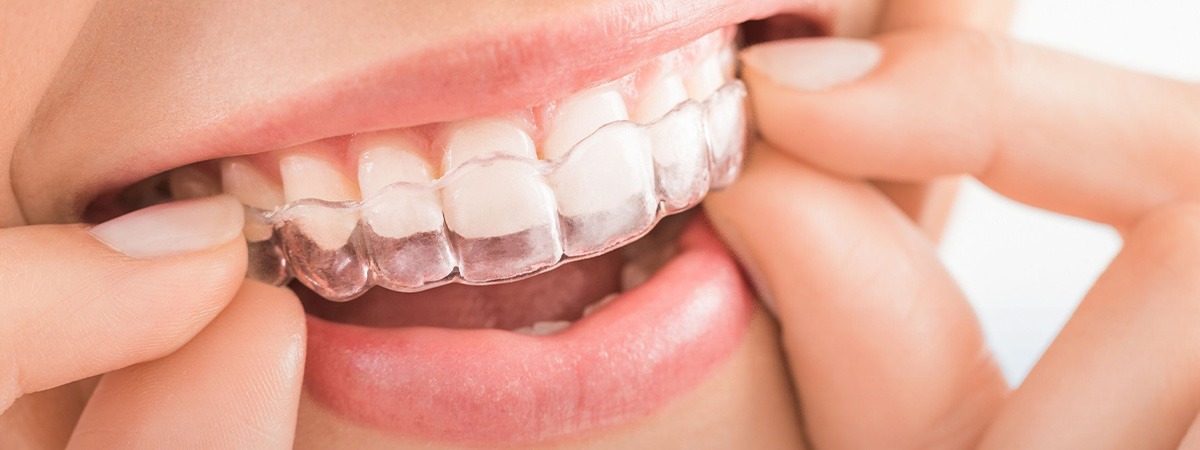
Get Invisalign treatment in Dubai at Dr. AL Dental Clinic. Clear aligners & braces for a perfect smile. Safe, effective, and comfortable.
Read More
Proper diet after dental surgery reduces pain and speeds healing. Read the complete post-surgery care guide by Dr. AL Dental Clinic.
Read More
The top 10 foods that harm your teeth. dentists share expert tips on what to avoid to prevent cavities, enamel damage, and tooth sensitivity
Read More
Straumann dental implants at Dr. AL Dental Clinic offer faster healing, long-term stability, and a natural smile you can trust for life.
Read More

